Online shopping takes the fitting room away and leaves you with a model who is not you, photographed in light that is not yours. A virtual try-on puts some of that back: you see the garment on your own body, next to your own face. Used well, it saves a lot of guessing. Used carelessly, it gives you a nice picture and the same old surprise when the package arrives.
When a try-on helps most
- A color you don't usually wear. Rust, mustard, sage, camel: colors that look great on a product page but can wash some people out. You see it against your skin straight away.
- A cut you have never tried. Wide-leg trousers after years of skinny jeans, a wrap dress, a longer coat. The proportions are the part people find hardest to imagine.
- Two options, one budget. Seeing both versions on yourself side by side often settles it faster than reading descriptions.
- Something to go with what you own. If you take your photo wearing the trousers you plan to pair it with, the try-on shows the new top with them.
It helps least with basics you already know fit you, such as another white tee in your usual size from a brand you already buy.
A routine that works
- Take one good photo of yourself, once. Standing, facing the camera, fitted clothes, light in front of you. Full length if you shop for dresses or trousers. You can reuse it for every item. The photo tips cover the details.
- Pick the right product image. Most product pages have four to eight pictures. Choose the one that shows the whole garment from the front, as plainly as possible (see "Choosing the product photo"). With FitInView you can also paste the shop link instead of saving an image.
- Run the try-on and look at it at full size. Not just the thumbnail. Check the things listed under "Reading the result honestly".
- Compare, don't judge in isolation. Try the alternative color, or a similar piece from another shop, and look at the results next to each other.
- Decide on the style, then switch to size. Once you know you want it, go to the size chart and the garment measurements. The try-on can't help with this step.
- Read the fabric and the return policy before paying. Composition tells you about stretch, warmth and creasing; the return policy tells you what a mistake would cost.
Choosing the product photo
The garment image is half of the input, and it matters as much as your own photo. In rough order of what tends to work best:
- Ghost mannequin or "invisible mannequin" shots: the garment shown in 3D shape with no person. These carry the cut, the length and the neckline cleanly.
- Flat lays: the garment laid flat on a plain surface. Good for color and details; shape is a bit less obvious, especially for trousers.
- On-model, front-facing, whole garment visible: works, but the model's styling can leak in, such as a tucked hem, rolled sleeves or a belt that is not part of the product.
- Avoid: close-ups of fabric, back views (unless your photo shows your back), outfits where the item is half hidden under a jacket, and heavily styled lifestyle shots.
Every garment in the gallery used a single clean product photo, the one shown with each look. Clean inputs like these tend to keep the result close to the product.
Reading the result honestly
A generated image is persuasive by nature: it is well lit, the garment sits neatly, nothing pulls. Look past that and check the things it is actually good at showing.
- Color against your face. Does the color bring your face forward, or does your skin look grayer or redder next to it? This is one of the most reliable things a photo try-on shows.
- Where lengths fall. A midi hem, a coat that ends at the knee, a cropped jacket at the waist. Lengths are drawn from the product image, so treat them as approximate, but the overall proportion is a fair guide.
- Volume. Does a wide leg or an oversized knit balance you, or swamp you? Compare it with how you feel in similar volumes you already own.
- Neckline and collar. Easy to judge, and hard to picture from a product page.
- The details. Compare buttons, pockets and print scale with the product photo. If something drifted, that tells you to trust the product photo over the try-on for those details.
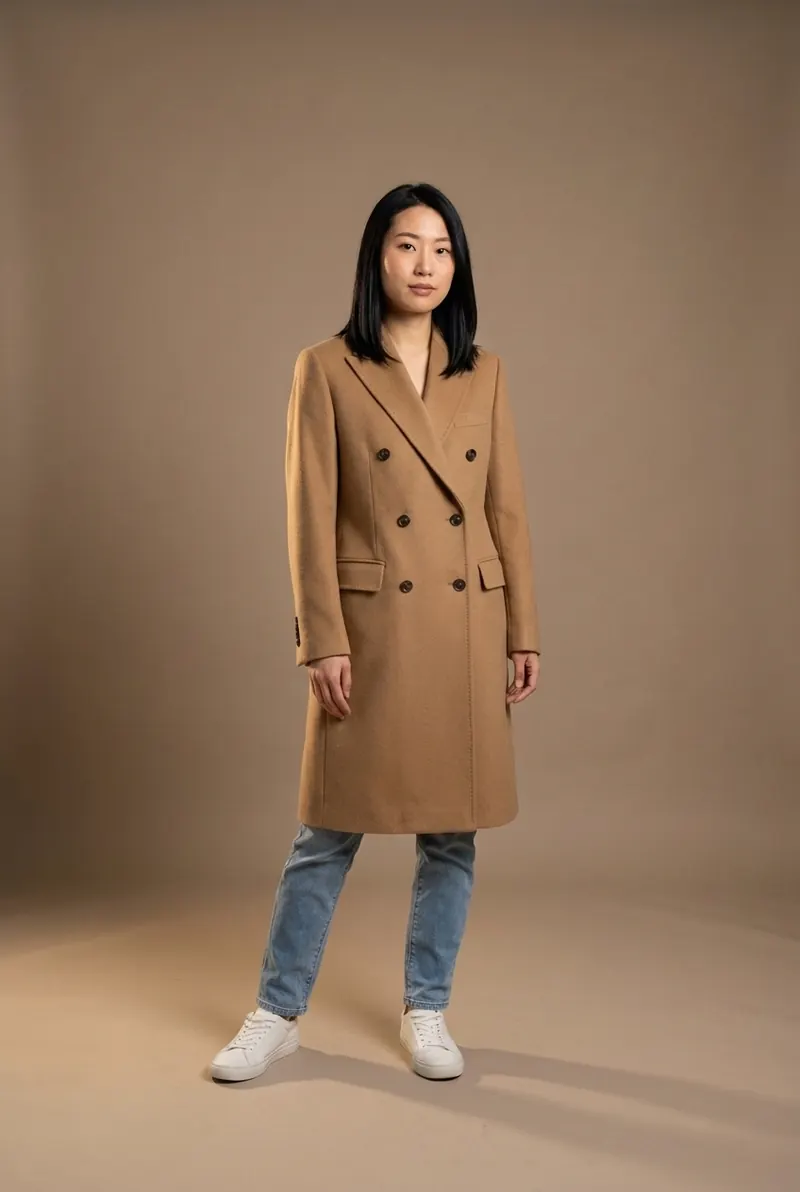 Room 1
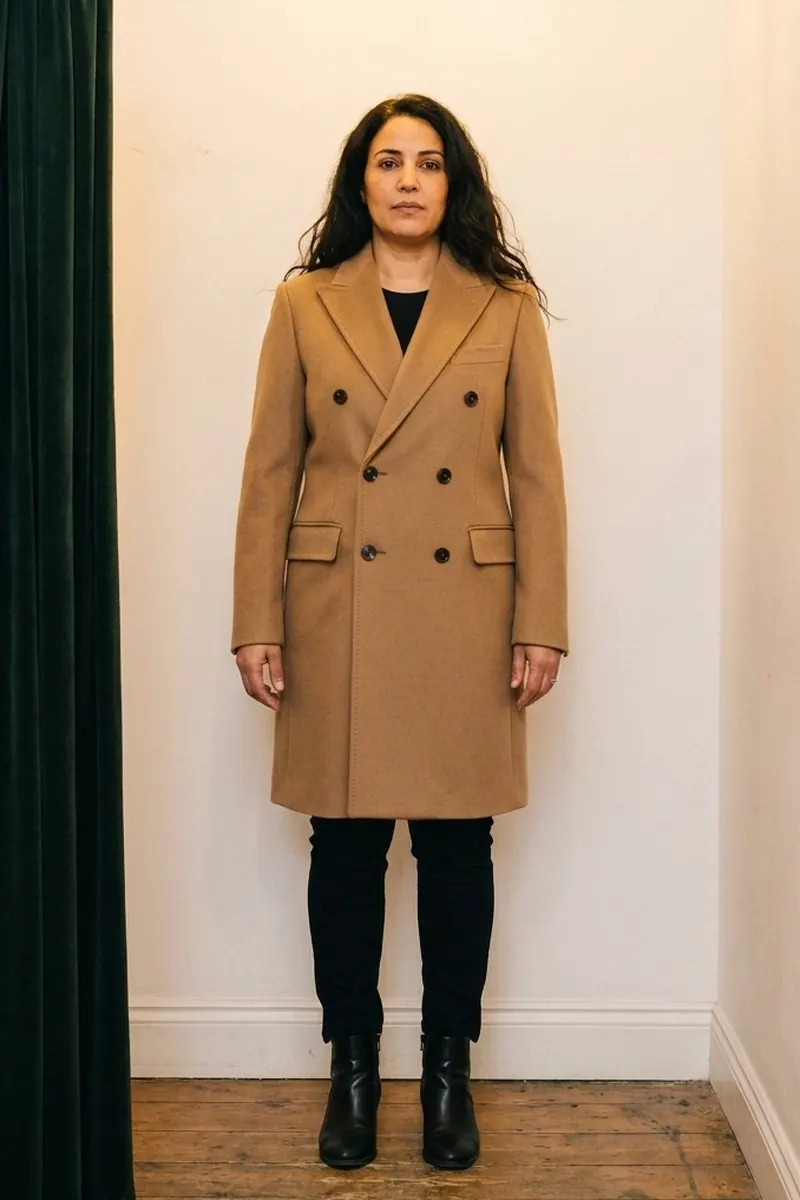 Room 5
The mistakes that cost the most
- Treating the try-on as a size check. The image fits you because the model drew it to fit you. Size is a separate step.
- Using a photo in very warm or very cool light. Your skin tone and the garment color both shift, and the color verdict goes with them.
- Trying an item from a cropped or styled photo. If the product image shows the shirt tucked into trousers, the try-on may tuck it too. That is the photo, not the shirt.
- Skipping the fabric line. "100% polyester" and "100% linen" can look identical in a picture and feel nothing alike.
Shop link or photo?
FitInView takes either a photo of the garment or a shop link. A link is quicker when you are browsing; a photo gives you control over exactly which image is used, which matters for items where the first product image is a styled shot. Screenshots work too, as long as the garment fills most of the frame and nothing else (text, other clothes, a second person) competes with it.
Where this fits with real fitting rooms
A virtual fitting room is not trying to replace the moment you feel a fabric or walk around in shoes. It is good at narrowing down: going from twenty tabs to three, ruling out the colors that don't work, and spotting the cut you would never have picked off the rail. Then the usual checks take over: size against a garment you own, fabric, return policy. If you are deciding which kind of virtual fitting room to trust for which job, how virtual fitting rooms work has the comparison.